PVC-Based Innovation: The Fabric Technology Behind Makstelar
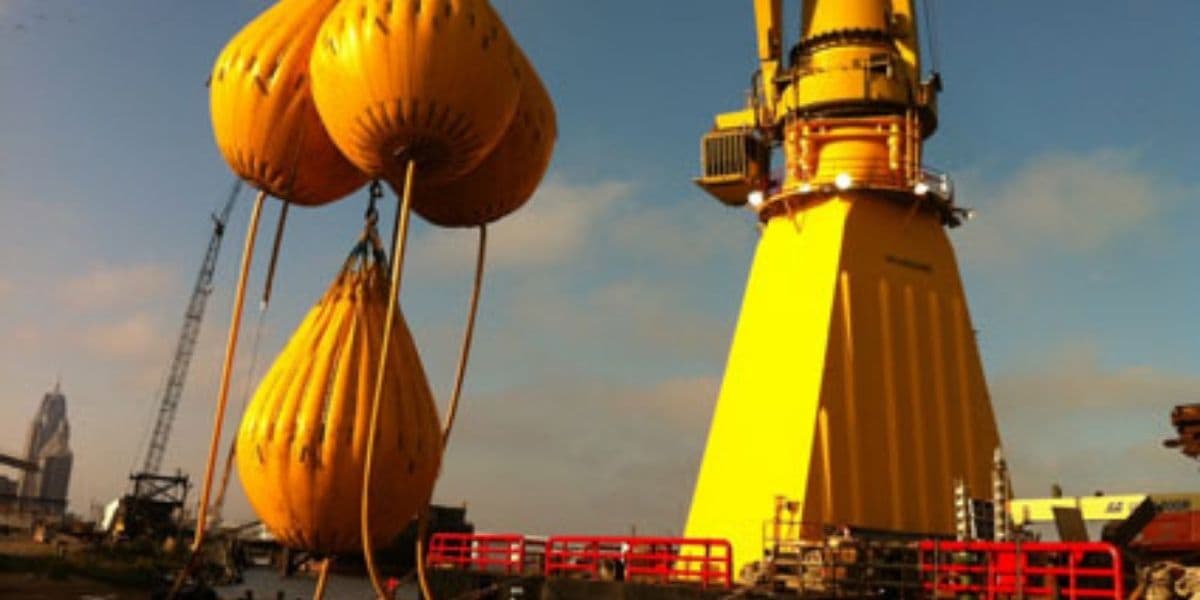
Behind every Makstelar product—be it a 250‑ton water bag or a slosh‑absorbing flexible tank—lies an unsung hero: advanced PVC‑coated fabric engineered to perform under punishing maritime conditions. Unlike commodity tarpaulins, Makstelar’s textiles are the culmination of a meticulous materials‑engineering process that balances strength, pliability, chemical resistance, and weldability. The journey begins with high‑tenacity polyester yarns that are twisted and woven into a base cloth with warp and weft breaking strengths exceeding 4,000 N/5 cm, ensuring dimensional stability under dynamic loads.
The woven substrate is then passed through a twin‑knife coating line where molten PVC is applied under precise tension and temperature control. Makstelar’s proprietary formulation incorporates plasticizers selected for low migration, UV blockers that resist photo‑degradation, and flame‑retardant additives compliant with DIN 4102‑B1 standards. A final top‑coat imbued with silicone micro‑particles delivers exceptional abrasion resistance, a critical attribute when fabrics are dragged across deck plates or rocky beaches during deployments.
Quality control does not stop at the coating stage. Samples from every batch undergo accelerated weather‑ing tests in Q‑Sun xenon arc chambers, cyclic flex testing at −30 °C, and hydrolysis exposure in 90 %‑humidity ovens. Only fabrics that retain at least 90 % of their tensile strength after these ordeals receive the Makstelar watermark. This relentless testing regime underpins the company’s ten‑year warranty against delamination and pin‑hole leaks—an assurance rarely matched in the industry.
Fabric performance is further enhanced by precision welding technology. Makstelar employs both high‑frequency and hot‑air welding robots equipped with machine‑vision cameras that monitor bead width in real time. The result is a seam that is not only aesthetically uniform but consistently achieves peel strengths higher than the base material. These seams are then coated with a polyurethane edge tape that shields them from chemical attack, especially important in oil spill applications where aromatic hydrocarbons can quickly degrade lesser constructions.
Looking forward, Makstelar’s R&D team is exploring bio‑PVC formulations that incorporate renewable feedstocks such as sugar‑cane ethanol and algae‑derived plasticizers. Parallel efforts in graphene‑enhanced coatings promise to deliver lightning‑fast electrostatic dissipation, opening the door for safe deployment in hazardous atmospheres. By relentlessly refining the fabric that forms the backbone of its product range, Makstelar is not merely keeping pace with industry expectations—it is setting a material technology benchmark for others to follow.